
Walk Like a Shunammite
2 Kings 8:1–9:29; Mark 16:1–20; Proverbs 6:28–35
Trust is a fickle matter. What does it take for us to trust another person—especially with our livelihood? Our decision to trust someone can usually be determined by whether we see God in that person.
When the Shunammite woman must decide whether to trust Elisha, it is a simple choice. God has already worked in her life through Elisha—giving her a son and then resurrecting him—so she understands that what he says is from Yahweh. When Elisha says to her, “Get up and go, you and your household, and dwell as an alien wherever you can, for Yahweh has called for a famine, and it will come to the land for seven years,” she trusts him (2 Kgs 8:1). She goes to Philistia (2 Kgs 8:2).
Would we do the same—leave everything and go to a foreign land at one godly person’s word? What does it take for us to trust someone with our lives? What does it take for us to trust God with our lives?
We will probably never encounter the decision the Shunammite woman had to make, but contemplating our answer reveals where we stand with God and others. It’s tempting to answer with a quick, “Of course,” but that would be to ignore the magnitude of her decision, and thus deny the seriousness of what God really asks of us—complete obedience, no matter what, to any degree necessary. Think about that for a moment: any degree necessary (compare Mark 8:34–38).
Are we really willing to acknowledge the gravity of what Jesus did in His death and resurrection (Mark 16:1–10)? Are we willing to live our lives as He intends? Are we willing to go to any place, to trust the word of God completely, to allow God to speak to us directly and through others, and to live passionately for Christ despite the cost?
Are you willing to go wherever God calls you?
JOHN D. BARRY
Barry, J. D., & Kruyswijk, R. (2012). Connect the Testaments: A One-Year Daily Devotional with Bible Reading Plan. Bellingham, WA: Lexham Press.

Rejected and Despised by Men
2 Kings 6:1–7:20; Mark 15:16–47; Proverbs 6:20–27
In Mark’s Gospel, Jesus’ crucifixion and death occur in stages of mockery and humiliation. The story is propelled by those who scorn—the soldiers, the chief priests and scribes, and even those who pass by. Jesus is spat on, stripped of His clothing, and mockingly forced to wear a purple robe with a crown of thorns. Throughout, He silently receives His undue punishment.
It’s not until Jesus nears death that Mark slows the narrative: “And at the ninth hour Jesus cried out with a loud voice, ‘Eloi, Eloi, lema sabachthani?’ (which is translated, ‘My God, my God, why have you forsaken me?’)” (Mark 15:34).
These words have been spoken before, and this pain and humiliation has previously been told. In Psalm 22, the psalmist cries out to God in the midst of being mocked and scorned by his enemies. The song of lament relates the bitter anguish the psalmist experiences at the hands of enemies. “He trusts Yahweh,” the psalmist’s enemies jeer, “Let him deliver him because he delights in him” (Psa 22:8). The psalmist says he is “poured out like water” in his weakened state (Psa 22:14). His clothing is divided and given out by casting lots (Psa 22:18).
The psalm doesn’t end here, though. It ends with the psalmist proclaiming God’s deliverance to all the nations and to future generations: “Descendants will serve him. Regarding the Lord, it will be told to the next generation. They will come and tell his saving deeds to a people yet to be born, that he has done it” (Psa 22:30–31).
Jesus’ words reveal Him to be the ultimate sufferer. It wasn’t until His death that He was acknowledged for who He was. The Roman centurion proclaims it: “Truly this man was God’s Son!” (Mark 15:39). The Servant who obediently came to die has delivered us. He has done it.
In what ways do you feel forsaken by God? What difference does it make to know that Jesus also cried out in His godforsakenness?
REBECCA VAN NOORD
Barry, J. D., & Kruyswijk, R. (2012). Connect the Testaments: A One-Year Daily Devotional with Bible Reading Plan. Bellingham, WA: Lexham Press.
Pain, Anguish, and Resurrection
2 Kings 4:18–5:27; Mark 14:51–15:15; Proverbs 6:12–19
Pain and anguish resound in the narrative of the Shunammite’s son and Elisha (2 Kgs 4:18–37). Reading the story, we can’t help but feel empathy for the Shunammite woman whose son has died. Yet Elisha seems so cavalier. What would prompt him to act this way? What is Elisha teaching us in this series of events?
Even those who have experienced miracles struggle to accept that God can handle anything. The Shunammite woman remarks to Elisha, “Did I ask for a son from my lord? Did I not say that you must not mislead me?” (2 Kgs 4:28). Elisha seems to recognize God’s capability, however, even when his colleague, Gehazi, and the Shunammite woman fail to see it. Elisha is so confident in God’s work that he remarks to Gehazi, “Gird up your loins [meaning ‘get ready’] and take my staff in your hand and go. If you meet anyone, you must not greet them; if anyone greets you, you must not answer them. You must put my staff on the face of the boy” (2 Kgs 4:29). Elisha doesn’t even feel the need to visit the child himself.
In the events that follow, we see complete empathy from Elisha, as well as total trust in God’s ability to intercede. After learning that his staff didn’t work, Elisha shows up himself. He lies on top of the dead boy’s body and breathes into his mouth (2 Kgs 4:32–34). After the boy’s body becomes warm again, Elisha paces for a while; then he bends over the boy, and the boy is resurrected (2 Kgs 4:35–36). The boy’s mother recognizes the miracle and praises God for it (2 Kgs 4:37).
So why is Elisha so cavalier? He understands that whatever God gives is also God’s to take away or to look after (2 Kgs 4:13–17). He knows that God is in the resurrection business. This is the same kind of situation we see with Lazarus and Jesus (compare John 11). Through Elisha’s story, we learn of God’s ability to bring back to life those whom He brought into the world in the first place; through Jesus, we learn that God will bring all back to life.
Sometimes difficult things have to happen for us to see what God can do. Elisha uses a moment of weakness to show God’s strength over flesh itself. Jesus allows Himself a moment of pain (“he wept”—John 11:35) to show God’s strength over all flesh. He has the ability to resurrect our broken bodies and our broken lives.
What part of your life needs redemption? How does the hope of resurrection change your feelings about current circumstances?
JOHN D. BARRY
Barry, J. D., & Kruyswijk, R. (2012). Connect the Testaments: A One-Year Daily Devotional with Bible Reading Plan. Bellingham, WA: Lexham Press.
Warring Tendencies and Spiritual Airs
2 Kings 3:1–4:17; Mark 14:22–50; Proverbs 6:6–11
“I will do this!” I declare as I resolve to get in shape, eat better, save money, study and meditate on the Word more, journal more, read more. My plans escalate, growing grander in scale and depth. Although I succeed in them for a while, I easily become overwhelmed when I can’t live up to the inflated vision I’ve projected for myself.
It’s especially easy to do this spiritually. It’s simple to hand out godly advice with a spiritual air, to speak wise words about past failings (read subtext: “Look how far I’ve come!”), and to talk about personal growth. But when we mess up on a colossal scale, it’s humiliating and surprising to all—especially ourselves. “What happened?” we might ask. “I was doing so well!”
Simon Peter had a tendency to make grand plans: “Even if they all fall away, certainly I will not!” he declared, proclaiming his loyalty to the Savior (Mark 14:29). They’re words to fall flat on your face by. When Jesus found the disciples sleeping, He knew who needed the reprimand and the warning: “And he came and found them sleeping, and he said to Peter, ‘Simon, are you sleeping? Were you not able to stay awake one hour? Stay awake and pray that you will not enter into temptation. The spirit is willing, but the flesh is weak!’ ” (Mark 14:37–38).
Jesus’ reprimand should have exposed Simon Peter’s pride, which was parading as loyalty. For all his exuberant claims, Simon Peter lacked true understanding of his nature. When he considered his spiritual state, he was optimistic about his own efforts. No one was more humiliated and more surprised than he when he later betrayed Jesus around a charcoal fire to curious strangers.
Our desire to follow Jesus is not the problem. Instead, it is our competitive nature, our pride, that needs to be repeatedly humbled. We need real understanding of our spiritual state—a picture we shouldn’t try to project in any other way—coupled with a total dependency on Him. A war is being waged inside of us. We can only win because of what Christ has done and because of the Spirit’s work in us. To God belongs all the glory.
Are you spinning your sin, making it seem less dire than it really is?
REBECCA VAN NOORD
Barry, J. D., & Kruyswijk, R. (2012). Connect the Testaments: A One-Year Daily Devotional with Bible Reading Plan. Bellingham, WA: Lexham Press.
When in Need
2 Kings 1:1–2:5; Mark 13:24–14:21; Proverbs 6:1–5
When we encounter trouble, we tend to look wherever we can for help: We turn in whatever direction seems most promising at the moment. In doing so, we may unwittingly walk away from Yahweh. Should practicality or convenience stand between God and us?
When King Ahaziah falls through a lattice and is injured, he seeks help from a foreign god rather than Yahweh—likely because it seems natural or right. He thinks the god of Ekron, Baal-Zebub, can provide the healing he needs. But what Ahaziah sees as a desperate situation is actually an opportunity for Yahweh to act; Yahweh plans to use this situation for His glory.
When Ahaziah sends messengers to Ekron, Yahweh intercedes. Elijah approaches them bearing a word from Yahweh that had been spoken to him by an angel: “Is it because there is no God in Israel that you are going to inquire of Baal-Zebub, the god of Ekron?” (2 Kgs 1:3).
When we experience physical or spiritual pain, do we first recognize Yahweh’s power and seek Him, or do we turn to other sources? Does our turning to other places demonstrate a lack of faith? What do we really believe in when we seek people, ideas, or things rather than God in our time of need?
The consequences of turning away from Yahweh can be tragic. Elijah goes on to declare: “The bed upon which you have gone, you will not come down from it, but you shall surely die” (2 Kgs 1:4). Let us turn to God before it comes to this. Let us choose Yahweh.
Whom are you turning to right now in your time of need?
JOHN D. BARRY
Barry, J. D., & Kruyswijk, R. (2012). Connect the Testaments: A One-Year Daily Devotional with Bible Reading Plan. Bellingham, WA: Lexham Press.
I (Don’t) Want to Hear it
1 Kings 22:1–53; Mark 12:35–13:23; Proverbs 5:11–23
My attempts to find guidance are often flawed. I long for honest appraisal of my actions, but I can sometimes be sneaky about choosing my appraiser. When those who know me present a real, raw look at my life and offer hard, helping words, I can become defensive and angry. I might pick a fresh voice instead—someone who doesn’t know my weaknesses and tendencies. “They’re not biased,” I tell myself.
When Ahab and Jehoshaphat combine forces to recapture Ramoth-gilead from the Syrians, they want divine assurance. However, they aren’t necessarily willing to receive divine direction. Ahab, king of Israel, inquires of his 400 prophets, and they assure him of victory. Jehoshaphat isn’t convinced, so he asks for “a prophet of Yahweh.”
Ahab’s response isn’t so far from my own: “Then the king of Israel said to Jehoshaphat, ‘There is still one man to inquire from Yahweh, but I despise him, for he never prophesies anything good concerning me, but only bad: Micaiah the son of Imlah’ ” (1 Kgs 22:8).
Micaiah can’t really win when it comes to Ahab. When he responds sarcastically to Ahab’s request—telling him he’ll conquer and win—Ahab demands he tell the truth. When Micaiah reveals what Ahab doesn’t want to hear—imminent defeat—Ahab complains that Micaiah never prophesies anything good about him.
When we hear hard words, we often take out our aggression out on the messenger. We regard them as the one at fault. “You always respond this way,” we’ll say. “You don’t really understand me.” Soon, we avoid these truth-tellers because their words of truth expose our sin. And if our sin remains concealed, we won’t have to admit it exists. If we don’t admit it, we won’t have to confess it. And if we don’t confess it, we won’t have to turn from it.
It’s all too easy to avoid necessary reform. But if we truly seek to follow God, we can’t avoid the hard truth. When we truly need guidance, we must be willing to face the truth-tellers—even when it hurts.
Who are the people you go to for guidance? Why? Whose guidance are you really rebelling against?
REBECCA VAN NOORD
Barry, J. D., & Kruyswijk, R. (2012). Connect the Testaments: A One-Year Daily Devotional with Bible Reading Plan. Bellingham, WA: Lexham Press.
Economics, Currency, and Caesar
1 Kings 20:26–21:29; Mark 12:1–34; Proverbs 5:1–10
Jesus’ command to pay taxes is one of the trickier passages in the NT. The actual line isn’t tricky—“Give to Caesar the things of Caesar, and to God the things of God” (Mark 12:17)—but its origins and Jesus’ exact reasoning aren’t as clear.
People have taken this passage to suggest that Jesus was in favor of government or taxes. But this interpretation misses the point. We’re meant to learn from Jesus here, not take away some regulation. Certainly Jesus condones paying taxes and charity work, but those points touch only on the basics of His statement.
First, Jesus is annoyed. The Pharisees and Herodians are testing Him with this question, and He doesn’t approve. His reaction suggests that simply taking away a “law” here would sadden Him, for that’s all the Pharisees and Herodians cared about (Mark 12:15). The “law” would address only the political question.
Jesus goes on to ask for a denarius, signaling that He doesn’t have one—He is poor (Mark 12:15–16). This coin had Caesar’s image on it and claimed divinity for Caesar. Jesus’ remark acknowledges the claim: “Give to Caesar the currency of his kingdom’s economy.” He also addresses the larger issue of the “image of God” (Gen 1:27): “Give to God the things of God” (Mark 12:17). What belongs to God? The entire world and everything in it—our very selves. We are meant, as members of God’s work, to act as people who operate within His currency of sacrificial living.
The Pharisees and Herodians’ question and Jesus’ answer are political, but the politics are eternal. The economics have ramifications for all people, for all time. They change the way we as Christians act and operate. They change what we value. The economic shift is an “image-bearing” shift.
Whom do you serve? Give to God what He deserves. Give to the kingdoms of this world what they have created (their currency). Give to God what is God’s—your very life. Operate under God’s currency as one who bears His image.
What is God asking you to give?
JOHN D. BARRY
Barry, J. D., & Kruyswijk, R. (2012). Connect the Testaments: A One-Year Daily Devotional with Bible Reading Plan. Bellingham, WA: Lexham Press.
Staying the Course
1 Kings 19:1–20:25; Mark 11:1–33; Proverbs 4:18–27
“May your eyes look forward and your gaze be straight before you. May the path of your foot be balanced and all your ways be sure. Do not swerve right or left; remove your foot from evil” (Prov 4:25–27).
These verses reflect someone who has incredible purpose. I imagine an acrobat walking a tightrope—knees bent, one foot carefully placed in front of the other, and nothing but a slender rope keeping him from plummeting to the ground. Such efforts would require incredible calm, effort, and focus—especially focus. The body naturally follows the path of our eyes, which is detrimental if we’re focused on the wrong thing.
The idea of staying the course illustrates God’s path and purpose for us. When we act, speak, and follow that path, we are carrying out His will for our lives. But there’s a problem: We can’t. All of our efforts are tainted. Our knees are bound to buckle, we’re sure to misstep, and it’s just a matter of time before we swerve to our own disadvantage.
Before we lose hope, though, we can remember God’s sacrifice. Jesus’ work of redeeming us has reversed our fate. The threat is gone—and that changes everything. Our lives are infused with the incredible purpose of His costly death. We have a renewed sense of hope because of His resurrection.
The cross puts everything in perspective. It is the new focus of our gaze. From His sacrifice to the time when redemption is complete, we are meant to live intentional lives that reflect His purpose. Keeping our eyes on Him helps us to stay on the path.
How are you staying the course?
REBECCA VAN NOORD
Barry, J. D., & Kruyswijk, R. (2012). Connect the Testaments: A One-Year Daily Devotional with Bible Reading Plan. Bellingham, WA: Lexham Press.

The Spiritual Battle
1 Kings 18:1–46; Mark 10:17–52; Proverbs 4:8–17
Sometimes our work for God requires severe actions. In these times—ones that we can’t possibly prepare for—we need to rely on the Spirit and its work to empower us.
I have always admired Elijah the prophet because he goes into firestorms with little, if any, preparation. The Spirit of God is his leader, sword, and shield. One of the most frightening moments in Elijah’s life is his encounter with the prophets of Baal at Mount Carmel. How could Elijah prepare to face 450 prophets from the enemy nation who are endorsed by Elijah’s own king? He faced certain death. Perhaps he had even reconciled himself to the idea that his life would end on that mountain.
Elijah’s supreme confidence in Yahweh is inspiring. He instructs the prophets of Baal, “Choose for yourselves one bull and prepare it first, for you are the majority, and call on the name of your god, but don’t set fire under it” (1 Kgs 18:25). After the other prophets fail to bring down fire from heaven, Elijah does what must be done: He calls down fire, and then he kills the evil prophets (1 Kgs 18:30–40).
Although Elijah’s particular actions do not apply directly today, his boldness certainly does. We should never fear walking into a fight against evil; instead, we should be ready to engage those who lead others astray. We must be certain that God will give us His words. He will act through us.
Whenever we’re in need, no matter how severe the situation, God can deliver us. We cannot prepare for the battle against the great evil that lurks in the world, but we can be certain that God will be with us.
What evil must you face? What do you need? Have you asked God for it?
JOHN D. BARRY
Barry, J. D., & Kruyswijk, R. (2012). Connect the Testaments: A One-Year Daily Devotional with Bible Reading Plan. Bellingham, WA: Lexham Press.
Exclusivity
1 Kings 15:25–17:24; Mark 9:38–10:16; Proverbs 4:1–7
We often think that God needs us—that we are His arms rather than His agents. When we see our work as integral to God’s kingdom, thinking that God needs us, our vision, our doctrines, or our ideas in order to further His kingdom, we might be guilty of something else entirely. These feelings are often motivated by our own feelings of inadequacy. We can sometimes be more concerned with proving ourselves than honoring God.
When the disciples learned that others were casting out demons in Jesus’ name, they tried to prevent them. “We saw … and we tried to prevent him because he was not following us,” they told Jesus (Mark 9:38). But Jesus only rebuked them: “There is no one who does a miracle in my name and will be able soon afterward to speak evil of me. For whoever is not against us is for us. For whoever gives you a cup of water to drink in my name because you are Christ’s, truly I say to you that he will never lose his reward” (Mark 9:38–41).
The disciples needed to be reminded that they had been chosen, but they were not exclusive agents. Having had difficulty casting out demons themselves, the disciples may have been jealous of this man’s ability. But Jesus reminded them that even the smallest task completed in His name—even giving someone a drink of water—is work done for His kingdom that will be rewarded.
Although He doesn’t need our help, Jesus invites each of us to be part of His plan. He desires our involvement if we do so obediently and willingly, with no thought to how great our actions will be weighed. When we accept that offer and join in His work, we are following Him and making much of Him. We won’t be distracted by ourselves.
How open are you to the idea that God can work in ways that don’t depend on us?
REBECCA VAN NOORD
Barry, J. D., & Kruyswijk, R. (2012). Connect the Testaments: A One-Year Daily Devotional with Bible Reading Plan. Bellingham, WA: Lexham Press.
Traditions and Miracles
1 Kings 14:1–15:24; Mark 9:2–37; Proverbs 3:23–35
In the face of perplexing situations, we naturally respond with what we know and understand—we even take refuge in familiar traditions. This is precisely how Jesus’ disciples respond when Jesus is transfigured before them.
After Jesus is transformed and Moses and Elijah appear, Peter says, “Rabbi, it is good that we are here! And let us make three shelters, one for you and one for Moses and one for Elijah” (Mark 9:5). Peter is drawing on the Festival of Tabernacles (or Booths), which celebrated God’s dwelling among His people (Lev 23:42–43). Peter isn’t certain how to respond, so he evokes a tradition. At least Peter understands that this confusing event shows God at work among His people.
But is Peter’s response the correct one? Mark gives us a hint in an aside: “For [Peter] did not know what he should answer, because they [Peter, James, and John] were terrified” (Mark 9:6). It’s not surprising that Peter has trouble understanding this situation—who could? But his response, underscored by the editorial aside in Mark, suggests something larger about how we, as the audience of this Gospel, should understand Jesus.
When Jesus reveals Himself to us—really inaugurates His reign in our lives—it may be terrifying, but we do not need to resort to our traditions to understand it. By going back to our old ways, we might lose sight of the point of God’s work altogether. Instead, we must be ready to accept what is new. We must realize that when God acts, the results will be unexpected and perhaps unexplainable. When God intercedes in our lives, when He lets us experience Him, our lives—our very view of the world—will change.
What traditions is Jesus radically altering in your life?
JOHN D. BARRY
Barry, J. D., & Kruyswijk, R. (2012). Connect the Testaments: A One-Year Daily Devotional with Bible Reading Plan. Bellingham, WA: Lexham Press.
Take Up Your Cross
1 Kings 13:1–34; Mark 8:11–9:1; Proverbs 3:13–22
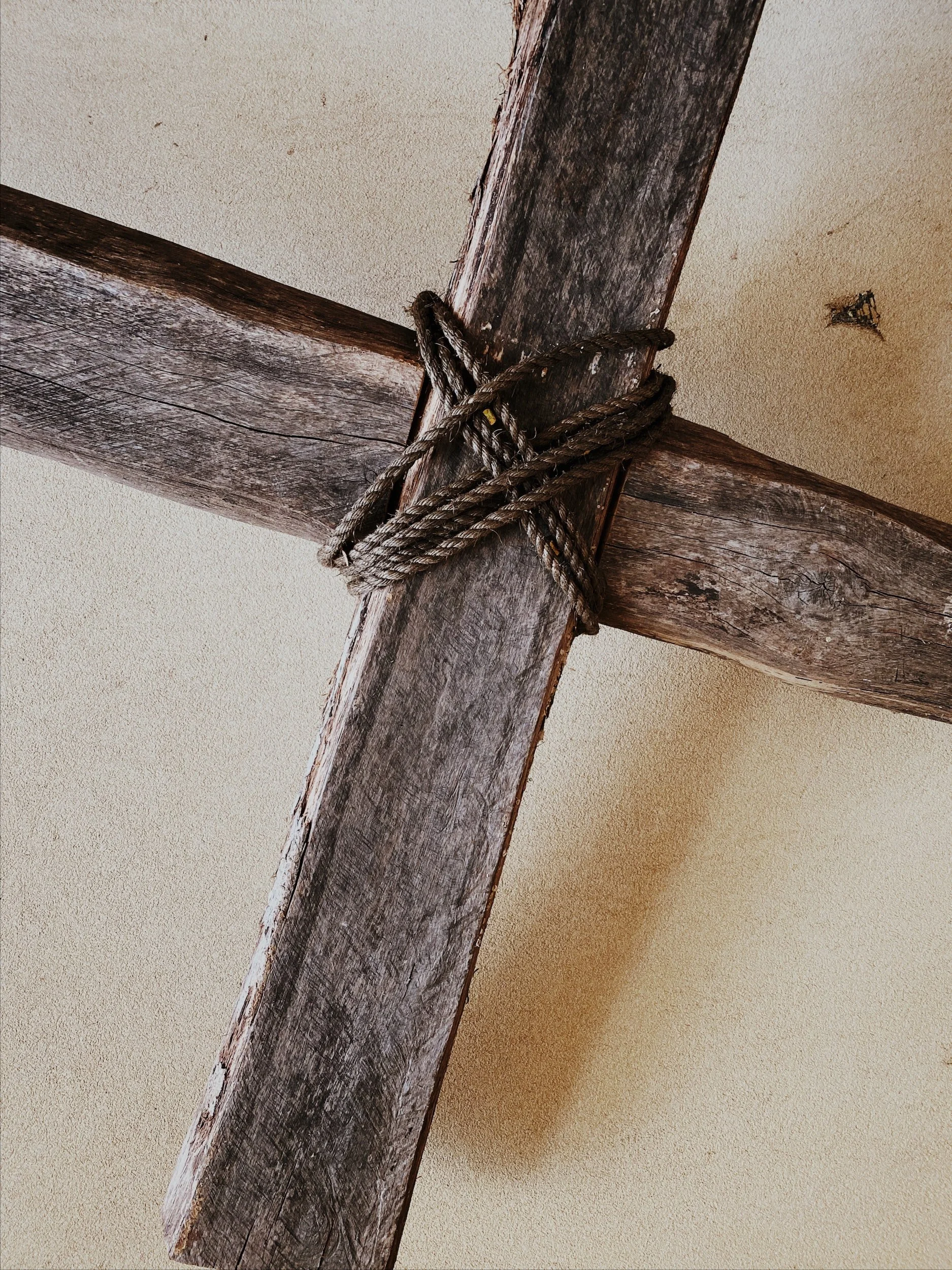
The way we respond to desperate circumstances often clarifies what gives us hope. Jesus’ followers faced the very real threat of death by choosing to follow Him—something He warns them about: “And summoning the crowd together with his disciples, he said to them, ‘If anyone wants to come after me, let him deny himself and take up his cross and follow me. For whoever wants to save his life will lose it, but whoever loses his life on account of me and of the gospel will save it’ ” (Mark 8:34–35).
In Jesus’ time, “taking up the cross” would have been associated with a shameful death at the hands of the ruling Roman powers. To risk suffering this type of shameful death required more than lukewarm commitment.
Jesus doesn’t limit this calling to His disciples; anyone who “wants to come after” faces this uncertainty and must hold a faith that displays this loyalty. For some Christians today, following Jesus means opposition and death. For most of us, it doesn’t. Yet Jesus goes on to show that this type of devotion is still relevant today: “For whoever is ashamed of me and my words in this adulterous and sinful generation, the Son of Man will also be ashamed of him when he comes in the glory of his Father with the holy angels” (Mark 8:36–38).
Many of our lives reflect a lax neutrality—a purposeless ease that avoids conflict and commitment. We might shy away from bold claims. We might fade into the wallpaper in an attempt to fit in. We might show reluctance to declare Christ’s name.
What does commitment look like for you? Are you following Jesus with this type of devotion? Or do you hesitate to share the good news?
How are you taking up your cross?
REBECCA VAN NOORD
Barry, J. D., & Kruyswijk, R. (2012). Connect the Testaments: A One-Year Daily Devotional with Bible Reading Plan. Bellingham, WA: Lexham Press.
Fear Not What’s Outside but Inside
1 Kings 11:9–12:33; Mark 7:14–8:10; Proverbs 3:6–3:12
How should we respond to a miraculous experience? Worshiping God for His goodness is the right place to start, but our ongoing response is every bit as important as our initial reaction. We see this play out in Solomon’s life.
“Yahweh was angry with Solomon, for he had turned his heart from Yahweh, the God of Israel who had appeared to him twice. And [Yahweh] commanded [Solomon] concerning this matter not to go after other gods, but he did not keep that which Yahweh commanded” (1 Kgs 11:9–10).
Despite Solomon’s experience with Yahweh, he chose to deny Him. This angered Yahweh—not just because of the general disobedience, but also because, after Solomon’s miraculous experience, he had more reason than anyone to stay devoted. Solomon’s refusal of the opportunity to turn back to Yahweh only aggravated the situation.
We don’t know exactly what led Solomon to disobey, although selfish desire, lust, and power seem to dominate his poor decisions. We can be certain that his inner thoughts drove him to act in the way he did. Solomon’s situation is reminiscent of Jesus’ remark about what defiles a person: “For from within, from the heart of people, come evil plans, sexual immoralities, thefts, murders, adulteries, acts of greed, malicious deeds, deceit, licentiousness, envy, abusive speech, pride, foolishness. All these evil things come from within and defile a person” (Mark 7:21–23).
How many of us have at some point walked off God’s path and excused our actions in the name of grace? Solomon had ample opportunity to return to God, yet he continued to aggravate Him. How many of us react the same way to the goodness God has offered us?
What is happening “in” you that leads to the evil in your life? How can you allow the Spirit to resolve that?
JOHN D. BARRY
Barry, J. D., & Kruyswijk, R. (2012). Connect the Testaments: A One-Year Daily Devotional with Bible Reading Plan. Bellingham, WA: Lexham Press.
Traditions and a Priority Problem
1 Kings 10:1–11:8; Mark 6:45–7:13; Proverbs 3:1–5
Traditions make us feel secure. They give us a sense of camaraderie with those who came before us, and they can build a sense of community with those around us. But traditions handed down unexamined can be dangerous. We can apply them in contexts that differ from those in which they were born—often leading to disastrous results, offenses, and misunderstanding. More dangerously, we might consider these human traditions to be the commands of God—or above His commands. In doing so, we hold the opinions of people to be higher than God’s. We commit the same type of idolatry we find rampant in the OT.
In many communities, traditions can carry the heavy weight of religiosity, as if God were the very author of the tradition. Many of the Pharisees in Jesus’ time were known to “tie up heavy burdens and put them on people’s shoulders” (Matt 23:4). When the Pharisees confront Jesus because His disciples did not wash before eating, Jesus quotes from Isaiah: “This people honors me with their lips, but their heart is far from me; in vain do they worship me, teaching as doctrines the commandments of men” (Mark 7:6–7).
To us, hand-washing seems like a smart, valuable tradition. For these Pharisees, it is a cleansing ritual meant to protect against defilement. Jesus shows how the practice sharply conflicts with the state of their hearts, which are far from God. The Pharisees often excuse some of God’s commands if it means following their traditions—like offering sacrifices while neglecting to provide for the material needs of parents (Mark 7:11–13).
Are there areas in your life in which you hold others’ opinions above those of God? Do you have nagging guilt because you’re not living up to others’ expectations? Why? Examine your life, seek biblical wisdom, and ask God to show you how best to serve Him.
How are you holding the values of people higher than those of God?
REBECCA VAN NOORD
Barry, J. D., & Kruyswijk, R. (2012). Connect the Testaments: A One-Year Daily Devotional with Bible Reading Plan. Bellingham, WA: Lexham Press.
The Results of Worship and Teaching
1 Kings 8:54–9:28; Mark 6:7–44; Proverbs 2:16–22
“It happened that when Solomon finished praying to Yahweh all of the prayer and this plea, he got up from before the altar of Yahweh, from kneeling down on his knees with his palms outstretched to heaven. He stood and blessed all of the assembly of Israel with a loud voice …” (1 Kgs 8:54–55).
Solomon demonstrates the natural and proper response to worship—declaring God’s goodness to others and blessing them in His name. These blessings can come in simple forms, such as doing good for others, or they may look more elaborate, as Solomon’s prayer continues in 1 Kgs 8.
Worship can become stilted when we focus on our place before Yahweh instead of His natural and rightful place. We’re meant to view Yahweh for who He is and what He has done, and to respond to His work by helping others.
Jesus demonstrated a similar point in His own ministry. He could have kept His disciples with Him day and night, but instead He sent them on their way to do God’s will (Mark 6:6–13). For Jesus, teaching was a means to an end. Everything the disciples had learned up to that point would carry them in the ministry work they were about to do. They weren’t meant to hoard their knowledge or focus on learning for learning’s sake. Instead, teaching led to action.
We, too, must follow worship with actions. When we learn, we must act upon what we have learned. Anything that stays in a vacuum is useless. It’s only when we apply what God is doing in our lives that we live up to our calling in Him.
What is God asking you to live out?
JOHN D. BARRY
Barry, J. D., & Kruyswijk, R. (2012). Connect the Testaments: A One-Year Daily Devotional with Bible Reading Plan. Bellingham, WA: Lexham Press.

The Pursuit of God
1 Kings 8:1–53; Mark 5:21–6:6; Proverbs 2:1–15
We’re willing to put an incredible amount of effort into pursuing something that’s really important to us. Before buying a new gadget, we’ll read reviews, research the manufacturer’s reputation, and consult our tech-savvy friends. Our efforts and curiosity betray the true treasures of our hearts. Other things that we say are important might not receive the same effort—often to our detriment.
In Proverbs, being curious about God’s ways is vital for life. The father in Proverbs encourages his son to be curious about God’s ways, representing his desire to fear God: “My child, if you will receive my sayings, and hide my commands with you, in order to incline your ear toward wisdom, then you shall apply your heart to understanding. For if you cry out for understanding, if you lift your voice for insight, if you seek her like silver and search her out like treasure, then you will understand the fear of Yahweh, and the knowledge of God you will find” (Prov 2:1–5).
The knowledge of God isn’t just knowledge about God. It’s also the desire and the process of inclining and applying your heart to understanding. The father encourages his son to cry out for understanding or lift his voice for insight—going beyond just intellectual comprehension. The son must seek understanding the same way someone might search out silver or a treasure. The father wants his son to learn about God’s ways, to understand them himself so he can apply them to his life.
We might claim to hold to a life of worship, but do our actions really reflect that value? Do our efforts and decisions reflect a heart that cries out to God for His wisdom? God has redeemed us at a great price with the death of His son. He desires that we turn over our lives to Him—and that includes pursuing Him with all our being.
Are you pursuing “the knowledge of God” and applying your heart to understanding?
REBECCA VAN NOORD
Barry, J. D., & Kruyswijk, R. (2012). Connect the Testaments: A One-Year Daily Devotional with Bible Reading Plan. Bellingham, WA: Lexham Press.
Of Fields and Temples
1 Kings 7:1–51; Mark 4:26–5:20; Proverbs 1:28–33
The building of Solomon’s temple and the growth of the kingdom of God are similar: Both require extensive labor. Both bring miraculous results. And in both efforts, the dredging and toil can proceed for weeks, months, or years before the fruits of the labor become apparent.
When the Bible describes the building of God’s temple, it mentions features and materials that would have been incredible at the time: “He built the House of the Forest of Lebanon … It was covered with cedar above … There were three rows of specially designed windows … All of the doorways and the doorframes had four-sided casings” (1 Kgs 7:2–5). Consider the logistical, expediting, and procurement hurdles that Solomon must have faced. How could one leader build a project that required the finest materials and the most highly skilled craftsmen from all over the known world, all in his lifetime? That it was completed is nearly miraculous. Even today, major architectural feats often take longer than a lifetime (e.g., Gaudi’s cathedral in Barcelona).
Like the construction of Solomon’s temple, what we as Christians build into other people’s lives is meant to happen miraculously. We labor for it, but the fruits are not ours—they are often unexplainable. Jesus once remarked, “The kingdom of God is like this: like a man scatters seed on the ground. And he sleeps and gets up, night and day, and the seed sprouts and grows—he does not know how. By itself the soil produces a crop: first the grass, then the head of grain, then the full grain in the head. But when the crop permits, he sends in the sickle [a tool for harvesting crops] right away, because the harvest has come” (Mark 4:26–29). We must continue to labor, knowing all the while that the results will be different than what we expect. We must rely on the Spirit for the real work.
What are you laboring at today? How may the results be different than what you expect?
JOHN D. BARRY
Barry, J. D., & Kruyswijk, R. (2012). Connect the Testaments: A One-Year Daily Devotional with Bible Reading Plan. Bellingham, WA: Lexham Press.
Cutting a Deal with God
1 Kings 5:1–6:38; Mark 4:1–24; Proverbs 1:20–27
Sometimes we think we can make deals with God. We hear His commands, but we plan on being faithful later. Or we make light of our rebellious thoughts and actions, thinking they’re only minor offenses in the grand scheme of things. Perhaps we think God will overlook them just as easily as we’ve rationalized them.
Jesus put special emphasis on “having ears to hear” in the Gospel of Mark. He expected much more than a captive audience, though: “ ‘If anyone has ears to hear, let him hear!’ And he said to them, ‘Take care what you hear! With the measure by which you measure out, it will be measured out to you, and will be added to you’ ” (Mark 4:23–24).
Jesus issued this command shortly after giving His disciples special insight into the parable of the Sower and the Seed. The rocky soil, the thorns, the road, the good soil—these represented various responses to the good news. The good soil was receptive to the seeds. But more than that, such soils “receive it and bear fruit—one thirty and one sixty and one a hundred times as much” (Mark 4:20).
Jesus revealed the secret of the kingdom to His disciples, to the surrounding crowd, and to us. Now that we hear, we must take care that we respond. Bear fruit befitting His work in you (Mark 4:20), and let others know why you bear fruit (Mark 4:21–22). Because He has given to you with such abundance, He expects you to live abundantly for Him—right now.
How are you rationalizing your response to God’s work? Are you delaying responding to God?
REBECCA VAN NOORD
Barry, J. D., & Kruyswijk, R. (2012). Connect the Testaments: A One-Year Daily Devotional with Bible Reading Plan. Bellingham, WA: Lexham Press.
Love and Commitment: Not Always Synonymous
1 Kings 3:1–4:34; Mark 3:1–3:35; Proverbs 1:13–19
Loving God and living fully for Him are not necessarily synonymous. If I love someone, does that mean I always show untainted respect and unfailing loyalty? Love should command complete devotion and commitment—but our lives are rarely as pure as they should be.
Like his father, David, Solomon acted out of passion and love, but his commitment and respect for Yahweh faltered at the same time: “Solomon intermarried with … the daughter of Pharaoh and brought her to the city of David … Solomon loved Yahweh, by walking in the statutes of David his father; only he was sacrificing and offering incense on the high places” (1 Kgs 3:1, 3).
Solomon didn’t marry Pharaoh’s daughter because he needed Egypt’s protection. Egypt, Israel’s ancient enemy, had enslaved God’s people once before, but it was not an imminent threat. Worse, Solomon committed himself to Pharaoh, an ally who viewed himself as a deity. This alliance introduced the worship of foreign gods into the chambers of the king who was supposed to steward God’s kingdom.
Solomon’s behavior is particularly ironic in light of his own words: “My child, do not walk in their way. Keep your foot from their paths, for their feet run to evil, and they hurry to shed blood” (Prov 1:15–16). Solomon may have avoided the wars and violence of his father’s generation, but he walked into a spiritually enslaving sin. Solomon’s problems epitomize Jesus’ words: “And if a kingdom is divided against itself, that kingdom is not able to stand” (Mark 3:24). By bringing Pharaoh’s daughter into his household, Solomon divided Yahweh’s kingdom against itself.
Was it lust that drove Solomon to make this decision, or a lack of faith, or a desire for peace? We cannot know for certain, but no matter the reason, this episode shows us something about ourselves. When we ally ourselves with God’s opponents or when we lust after what God has condemned, we do more harm than we realize. We divide what God is building in us and through us against itself by tainting His pure plan.
What are you wrongly allying with or lusting after? What are the long-term effects of doing so, and how can this perspective help you change course?
JOHN D. BARRY
Barry, J. D., & Kruyswijk, R. (2012). Connect the Testaments: A One-Year Daily Devotional with Bible Reading Plan. Bellingham, WA: Lexham Press.
We Will Follow?
1 Kings 2:1–46; Mark 1:35–2:28; Proverbs 1:8–12
The Gospel of Mark opens without fanfare—certainly nothing befitting literary greatness. There is no lofty imagery like the Gospel of John, no impressive genealogies like the Gospel of Matthew, and no historical narrative like the Gospel of Luke. Instead, Mark flashes rapidly through events that build on one another. John the Baptist’s prophecy is followed by short summaries of Jesus’ baptism and His temptation by Satan. After calling His first disciples, Jesus begins healing and preaching both near and far—all within the first chapter. The unadorned, clipped prose communicates something urgent.
Mark’s narrative captures the coming kingdom that will erupt with a power only some can see. It imparts a sense of urgency to those who know they are needy.
Mark portrays the advancing kingdom through the person and work of Jesus, who draws people. The crowds at Capernaum seek Him out (Mark 2:2), as do those marginalized by society (Mark 1:40; 2:3). Although Jesus seeks to keep His movements hidden and warns the leper to conceal the miracle of his healing, the exact opposite occurs. The leper opts to “proclaim it freely and to spread abroad the account” (Mark 1:45). When Jesus secludes Himself in deserted places because of His fame, the crowds come at Him “from all directions” (Mark 1:45). Even roofs are removed to gain access to Him (Mark 2:4).
While some question His authority, others respond with radical allegiance. Jesus’ simple, direct call to Levi the tax collector, “Follow me!” requires nothing less. Jesus came for lepers and paralytics, to sinners and tax collectors—those who are sick and in need of a physician (Mark 2:16). He came for us—those who know our desperate need—and reversed our fate. With unfettered truth, Mark presents us with the opportunity for the only healing response: Will we follow?
Are you following Jesus with total allegiance? What is holding you back?
REBECCA VAN NOORD
Barry, J. D., & Kruyswijk, R. (2012). Connect the Testaments: A One-Year Daily Devotional with Bible Reading Plan. Bellingham, WA: Lexham Press.