

Faithful Decision-Making
Jeremiah 21:1–22:30; Romans 3:1–20; Proverbs 17:1–28
“I asked God, and He didn’t answer me.” When I hear people say this, I’m often tempted to reply, “Haven’t you read the prophets?” Because sometimes what people are really saying is, “I asked God to do something for me, and He didn’t answer in the way I expected, so He must not be listening or He must not care.” Yet the prophets repeatedly tell us the opposite. God is not human, so He does not make decisions like a human. Instead, He sees all possible outcomes and knows the best route. We simply struggle to understand the wisdom of His decisions.
One particular event in the book of Jeremiah illustrates this point. When King Zedekiah (the last king of Judah) asks Jeremiah to intercede with Yahweh on behalf of Jerusalem against King Nebuchadnezzar of Babylon, Jeremiah gives an unexpected reply: Yahweh has refused to do so. He will not intercede for His own people. Rather, He will make Nebuchadnezzar’s task easier (Jer 21:1–7).
Before we view Yahweh as harsh and unforgiving, let’s recall that this occurs after God’s people have been rebelling against Him for hundreds of years. Even so, in Jer 21:8–10, God’s people are given a choice: They can remain in Jerusalem and die—for Yahweh has deemed that the city must fall—or they can enter what appears to be death but is actually life. Yahweh sets up a faith choice for them: “He who goes out and goes over to the Chaldeans who are laying siege to you will live, and his life will be to him as booty” (Jer 21:9).
Even in the midst of unbearable circumstances, Yahweh offers a way of grace. Even when everything seems to fail, we can decide to choose faith. This story mirrors what we experience on our deathbed. It also mirrors the decision we face every day of our lives: Will we listen to the voices of the world, or will we listen to the prophets who proclaim honest indignation and faithful decision-making? Will we stay in the city, or will we go where God calls us—no matter how difficult it may seem or how improbable?
Where is God calling you? What must you walk away from? What faith decision is before you?
JOHN D. BARRY
Barry, J. D., & Kruyswijk, R. (2012). Connect the Testaments: A One-Year Daily Devotional with Bible Reading Plan. Bellingham, WA: Lexham Press.
Constructing Lives by the Law
Jeremiah 18:1–18; Romans 2:12–29; Proverbs 16:12–33
Dispensing good, helpful advice gets the benevolent juices flowing. As easy as it is to give advice, though, it often hits me with the irony of a cartoon anvil when I end up tripping over my own counsel. When this happens, I’m convicted to examine my motives for advice-giving.
In his letter to the Romans, Paul challenges the superior mindset that was common among some Jewish people at the time: “But if you call yourself a Jew and rely on the law and boast in God and know his will and approve the things that are superior, because you are instructed by the law, and are confident that you yourself are a guide of the blind, a light to those in darkness, and instructor of the foolish, a teacher of the immature, having the embodiment of knowledge and of the truth in the law. Therefore, the one who teaches someone else, do you not teach yourself?” (Rom 2:17–21).
Paul is explaining why looking to the OT law for righteousness is futile. No person could perfectly keep the law. By holding to it, they were in fact condemning themselves. Paul even points out that some Jews thought they had attained a higher moral standing because of their knowledge of the law—and believed they were in a position to teach others. Yet they were still breaking the law.
It’s easy for us to discard this as an early church issue. Yet we still sometimes take comfort in “keeping the law” today. If we cling to our own good behavior rather than the righteousness we have in Christ, we commit the same sin. We can attempt to live like a saint—we can cultivate a reputation for goodness and dishing out wisdom—but we’ll set ourselves up for imminent failure because we can never keep up the pretense of godly behavior on our own.
However, if our “circumcision is of the heart”—if we trust in Christ’s sacrifice for our righteousness and the Spirit is working in us—then our hearts will be in the right place. That place is where we know we are great sinners, and where we are receptive to His transforming work to bring us into complete loyalty to Him. Then we will seek God’s favor, not the favor and superiority we crave from others.
If our lives are truly changed, we will be motivated to love others out of the love God shows us. That will give us the right perspective for seeing the transformation that God is working in their hearts. And it will free us to give the best advice of all: Seek God in everything.
What are your motives for giving advice?
REBECCA VAN NOORD
Barry, J. D., & Kruyswijk, R. (2012). Connect the Testaments: A One-Year Daily Devotional with Bible Reading Plan. Bellingham, WA: Lexham Press.
Self-Evident Hope
Jeremiah 16:1–17:27; Romans 1:18–2:11; Proverbs 16:1–11
“For the wrath of God is revealed from heaven against all impiety and unrighteousness of people, who suppress the truth in unrighteousness, because what can be known about God is evident among them, for God made it clear to them” (Rom 1:18–19). A statement like this could easily be taken out of context if we leave off everything after “people.” But when we contextualize this message, we find hope instead of hopelessness.
Paul goes on to tell us that creation itself reveals God and His goodness to humanity, so there is no excuse for failing to understand God and the salvation He offers: “For from the creation of the world, his invisible attributes, both his eternal power and deity, are discerned clearly, being understood in the things created, so that they are without excuse” (Rom 1:20).
We have all heard people who are concerned that salvation seems unfair: What about the people who won’t ever hear about Jesus? Yet Paul argues that everyone has an opportunity to witness Christ at work in creation itself. In Colossians he remarks that it’s in the “Son [Jesus] … whom we have the redemption, the forgiveness of sins, who is the image of the invisible God, the firstborn over all creation, because all things in the heavens and on the earth were created by him, things visible and things invisible, whether thrones or dominions or rulers or powers, all things were created through him and for him” (Col 1:13–16).
All people have an opportunity to know God. No one has an excuse. God’s justice reigns in creation; it reigns in Christ; and it reigns in the lives of those who choose Christ. Christ is everywhere, in all things. The world is not condemned unfairly by a God of unreasonable wrath; instead, it’s ruled by a God of joy and empathy who is love.
What misperceptions do you have of God? How can you correct them and work in the lives of others to do the same? How can you spread the empathy God wants you to display?
JOHN D. BARRY
Barry, J. D., & Kruyswijk, R. (2012). Connect the Testaments: A One-Year Daily Devotional with Bible Reading Plan. Bellingham, WA: Lexham Press.
The Gospel for Barbarians and Fools
Jeremiah 14:1–15:21; Romans 1:1–17; Proverbs 15:1–33
It’s dangerous when we feel entitled. We may come to believe our communities are righteous while all those outside are not. This can even take place inside our faith communities—popularity or various achievements can create subtle feelings of superiority. We begin to believe it’s something we’ve done that brings us favor.
As he writes to the church in Rome, Paul explains that it’s not anything we do, anything we are, or anything we obtain that makes us right with God. His calling verifies this: “I am under obligation both to Greeks and to barbarians, both to the wise and to the foolish. Thus I am eager to proclaim the gospel also to you who are in Rome” (Rom 1:14).
Ethnicity was a big obstacle for the early church to overcome, as the church was now made up of both Jewish and Gentile believers. God promised Abraham that through him “all the peoples on earth will be blessed” (Gen 12:3). Christ’s redemptive work had finally made this blessing a reality. God’s favor was no longer reserved for those who might be educated or wise. Paul emphasizes that God can redeem those who—to us—might seem unlikely recipients of redemption.
But most important, our standing before God is not based on our goodness. Paul is eager to proclaim the gospel in Rome because it is belief in Jesus, the fulfillment of the promise, that makes believers righteous before God—“the gospel … is the power of God for salvation to everyone who believes” (Rom 1:16). Christ’s righteousness has become our righteousness.
If anything, this fact should eliminate any sense of entitlement we might harbor and prompt us to walk in humility with believers and non-believers alike. Our relationship with God is intimately tied to how deeply we understand our need for God. The gospel frees us of any need to attain or achieve. For this, we should be incredibly thankful to God and live with humility for Him.
Do you put stock in the things you think make you a “favored” Christian?
REBECCA VAN NOORD
Barry, J. D., & Kruyswijk, R. (2012). Connect the Testaments: A One-Year Daily Devotional with Bible Reading Plan. Bellingham, WA: Lexham Press.
Relationship Will Change us
Jeremiah 12:1–13:27; Philemon 1:8–25; Proverbs 14:15–35
Although God has granted us complete access to Him through Christ, we struggle at times to live this reality (John 17:15–17). The stale or frightening depictions of God in stained glass and Renaissance paintings have convinced us that He is distant, quick to anger, or disinterested. Nothing could be further from the truth; the Psalms remind us that He is caring, close, and listening (e.g., Pss 22; 23; 26), and He yearns for a relationship with us.
Sometimes it helps to hear the words of others who have struggled with the same thing. Jeremiah provides us with such an example. He remarks, “You will be in the right, O Yahweh, when I complain to you. Even so, let me speak my claims with you. Why does the way of the wicked succeed? All those who deal treacherously with treachery are at ease” (Jer 12:1). Jeremiah knows that Yahweh is right in all He does, but this does not prevent him from freely expressing his concerns.
If we really look into our hearts, we may find that fear is preventing us from entering into an intimate relationship with Him. We’re afraid of what He will say; we’re concerned that He may rebuke us. Indeed, this is what He does when Jeremiah speaks to Him: “If you run with foot soldiers and they have made you weary, then how will you compete with horses? If you have fallen in a peaceful land, then how will you do in the thickets of the Jordan? For even your relatives, and the house of your father, even they have dealt treacherously with you, even they call loudly after you. You must not trust in them, though they speak kindly to you” (Jer 12:5–6). Yet within this rebuke, we also find advice—and the advice is comforting. By openly communicating his concerns to God, Jeremiah now knows what he must do. He knows how he must act.
There is joy to be found in knowing that we have a God who listens—a God who is not offended when we speak to Him but is eager for our company. What are we afraid of? After all, He already knows what’s on our minds. We need to grasp the idea that God is all about relationship.
What would change about your life if you went deeper into your relationship with Christ? What should you be asking God right now?
JOHN D. BARRY
Barry, J. D., & Kruyswijk, R. (2012). Connect the Testaments: A One-Year Daily Devotional with Bible Reading Plan. Bellingham, WA: Lexham Press.
The Easy Way
Jeremiah 10:1–11:23; Philemon 1:1–7; Proverbs 14:1–14
There is a certain amount of freedom in being foolish. Foolish people don’t stop to reflect on their actions. Characteristically unimaginative, foolish people don’t stop to consider how their words and actions affect others. The scary effect of foolishness is that it’s contagious: “Leave the presence of a foolish man, for you will not come to know words of knowledge. The wisdom of the clever is understanding his ways, but the folly of fools is deceit” (Prov 14:7).
There is an ease in self-deception because it’s our natural state. “There is a way that seems upright to a man, but its end is the way of death” (Prov 14:12). But the right way is not simply a more reflective, thoughtful life. We need a new way of life that can only be brought about in Christ—the one who reversed the power of death. Following the right way doesn’t mean relying on our own ability to be righteous through thoughtful actions. Rather, it means understanding our need for His righteousness. It’s God’s work in us, recreating us. It’s His Spirit, directing our ways and making us new in Him.
The fool does have influence, but a life transformed has far-reaching influence because it’s not our own work—it’s God’s. This is the calling of which Paul reminds Philemon. Paul tells Philemon that he has “great joy and encouragement” because of Philemon’s love. Because of his love, “the hearts of the saints have been refreshed through you brother” (Phlm 7). For this reason, Paul also holds Philemon to a high standard. Because of his great influence, he needs to be intentional about how he treats Onesimus, the redeemed slave who had wronged him.
Pray for a transformed life, and pray for the work of the Spirit in your life, dividing the light from the darkness and the foolish, deceitful parts from the wise. He will help you understand His ways if you ask Him. He will make the darkness evident, and He will show you the way of wisdom—a life that reflects Christ.
How are you praying for the Spirit’s ongoing work in your life, dividing the foolish ways from the wise?
REBECCA VAN NOORD
Barry, J. D., & Kruyswijk, R. (2012). Connect the Testaments: A One-Year Daily Devotional with Bible Reading Plan. Bellingham, WA: Lexham Press.
Do Not Harm
Jeremiah 7:30–9:26; Colossians 3:18–4:18; Proverbs 13:1–25
Love can hurt. Many well-intentioned people have done more harm than good while attempting to care for others. This is especially the case in cross-cultural situations, as well-meaning people attempt to introduce change without understanding the local culture. But it can even be true in our homes.
Paul’s words in Col 3:18–4:1 have been misused countless times by those seeking to gain or maintain power. Yet when we examine the passage closely, we find that Paul’s main goal is to teach the church in Colossae to help without hurting as he works toward seeing cultural norms in the light of the gospel.
When Paul talks about wives “submitting” to their husbands, he frames it in light of the phrase, “husbands love your wives” (Col 3:18–19). The submission he speaks of is not about giving up will or freedom; Paul is acknowledging the cultural and economic realities of the time and encouraging the Church to operate within those norms. In Graeco-Roman culture, the idea of married women having their own livelihoods—and thus holding complete autonomy in decision-making—was incomprehensible. Women couldn’t own property or vote. Paul acknowledges that Christ’s work in making all people equal will radically reframe culture (Gal 3:23–4:7), yet in Col 3:18–4:1, he’s concerned that if the Church introduces radical changes, it will gain a negative reputation in Graeco-Roman culture. He wants the Christian work in culture to help, not harm.
It’s for this same reason that Paul includes a provision for masters and slaves; however, as with men and women, he reframes the cultural norms to the extent possible: Masters are to grant their slaves “justice and fairness” (Col 4:1). Paul would have likely been alone in calling people to this standard. As his decision to subtly ask Philemon to free Onesimus shows, Paul likely wished to completely overturn slavery, but he also understood that doing so would take time (see especially Phlm 15–16). Paul’s charges to slaves and masters in Col 3:22–4:1 are meant to help until a more complete reform could take place.
Paul sees the Church as first setting basic examples, then progressing to a more radical framework as culture itself is changed by Christianity. In Paul’s lifetime, a radical reworking was not feasible—it would have resulted in culture completely rejecting Christ, and thus ended the very work He was trying to make happen. Therefore, Paul creates provisions to help people during the process of the change.
Love must work to change things that need to change. But ultimately, love must always avoid harm.
What is God calling you to change? How can you do so without harming others?
JOHN D. BARRY
Barry, J. D., & Kruyswijk, R. (2012). Connect the Testaments: A One-Year Daily Devotional with Bible Reading Plan. Bellingham, WA: Lexham Press.
Put Off, Put On
Jeremiah 6:1–7:29; Colossians 3:1–17; Proverbs 12:1–28
We often hear that being a good Christian means not doing bad stuff. This statement is true—but not exhaustive. In Colossians 3, Paul says, “Therefore put to death what is earthly in you: sexual immorality, uncleanness, lustful passion, evil desire, and greediness, which is idolatry” (Col 3:5). He then lists other inappropriate behaviors: “anger, rage, wickedness, slander, abusive language” (Col 3:8). And he also lists new behaviors we need to “put on,” like “affection, compassion, kindness, humility, gentleness, patience” (Col 3:12).
From this we can gather that, as Christians, our lives should look different. But is there more to this command than certain behaviors?
We’re not supposed to put on new behaviors simply so that we can have polished, admirable lives. Colossians 3 opens with a statement: “Therefore, if you have been raised together with Christ, seek the things above, where Christ is” (Col 3:1). Believers identify with Christ—just like we’ve died with Him, we’ve also been raised with Him. He is life for us. And one day, we will be reunited with Him, and we’ll reflect Him perfectly.
All of Paul’s teaching rests on this truth. And all of our actions should reflect this new life we have in Christ. We shouldn’t continue in the old behaviors that used to be common to us (Col 3:7). We are changing into His likeness. “You have taken off the old man together with his deeds, and have put on the new man that is being renewed in knowledge according to the image of the one who created him” (Col 3:9–10).
Avoiding certain behaviors is part of being a Christian, but it’s hardly just that. It’s about a new life built completely on the foundation of Christ’s life-giving work. We should forgive one another because He forgave us (Col 3:13). We should love each other and strive for unity because He loved us and united us to Him (Col 3:14). We should strive for peace with one another because Christ has conquered chaos (Col 3:15). The message of Christ and our new life in Him should help us encourage and challenge each other as believers (Col 3:16).
Does your life reflect this new life? How can you turn from simply avoiding bad behavior to seeking new life in Him?
REBECCA VAN NOORD
Barry, J. D., & Kruyswijk, R. (2012). Connect the Testaments: A One-Year Daily Devotional with Bible Reading Plan. Bellingham, WA: Lexham Press.
Facing the Storms on the Horizon
Jeremiah 4:19–5:31; Colossians 2:6–23; Proverbs 11:13–31
Having knowledge or insight into a situation and feeling helpless to act upon that information is one of the most frightening feelings we can experience. It makes us anxious, even pained.
Jeremiah 4 describes an experience like this: “My heart is restless within me, I cannot keep silent, for I hear in my inner self the sound of a horn, the alarm of war. Destruction on destruction is proclaimed, for all of the land is devastated.… How long must I see the banner, and hear the sound of a horn? ‘For my people are foolish, they have not known me. They are foolish children, and they do not have insight. They are skillful at doing evil, and they do not know how to do good’ ” (Jer 4:19–22).
How should we react in moments like these? How should we operate? There are no simple answers to these questions. But what is certain is that we must depend on God and His provision over our lives. We must look at the coming storms in our lives and the lives of others and recognize that Yahweh will be at work—regardless of the difficulties we encounter in the process.
Like Jeremiah, we must speak up, but we must root ourselves in Christ as we do so. As Paul writes, “As you have received Christ Jesus the Lord, live in him, firmly rooted and built up in him and established in the faith, just as you were taught, abounding with thankfulness” (Col 2:6–7). We must thank Christ for His work in us and live as He has asked us to live. If we are called to tell others about the ramifications of their actions, we must always be motivated by Christ’s love. For as the book of Proverbs tell us, “A gossip walks about telling a secret, but the trustworthy in spirit keeps the matter. Where there is no guidance, a nation shall fall, but there is safety in an abundance of counsel” (Prov 11:13–14).
Let our counsel be godly counsel. Let our words be truthful. Let us see that God will guide us in the events we can change and those that we can’t. And let our actions proceed from thankfulness and love.
What storm are you anxious about? How can you depend on God in that storm?
JOHN D. BARRY
Barry, J. D., & Kruyswijk, R. (2012). Connect the Testaments: A One-Year Daily Devotional with Bible Reading Plan. Bellingham, WA: Lexham Press.
The Mystery of God
Jeremiah 3:1–4:18; Colossians 1:15–2:5; Proverbs 11:1–12
“God wanted to make known what is the glorious wealth of this mystery among the Gentiles, which is Christ in you, the hope of glory” (Col 1:27).
Paul’s use of the word “mystery” in this passage may strike us as a bit strange. How is the person and work of Christ shrouded in secrecy? And why would Paul present Christ as a mystery if his point is that God wanted to make Christ known?
The answer is found in the culture of early Colossae, a city known for its infatuation with magic and the occult. Among the Gentile cults, “mystery” was often associated with a secret ritual that people must perform to create a relationship with a god. False teachers in the community at Colossae were promoting alternative ways to get to God—secret rituals that would lead to special knowledge for a select few.
Paul contextualizes the gospel for the Colossians. He adopts this “mystery” language to show that Christ is the only way to God. The mystical path presented to the Colossians was a farce—a shell of what the Colossian believers had in Christ. It’s in Him that “all the treasures of wisdom and knowledge are hidden” (Col 2:3).
Paul wisely draws on language and tradition familiar to his audience to make the “mystery” of Christ known to all—not just a select few. Paul says he proclaims Christ so that “by admonishing every person and teaching every person with all wisdom … we may present every person mature in Christ” (Col 1:28).
Because he was familiar with the culture of Colossae, Paul was able to acknowledge the challenges the believers faced, and then present the gospel as they needed to hear it: Christ is the only way. How are you resting in Christ as the only way to God? How are you thoughtfully revealing this “mystery” to those in your church and community?
Do you look for other ways to get to God, like your own goodness or your own ability to earn favor?
REBECCA VAN NOORD
Barry, J. D., & Kruyswijk, R. (2012). Connect the Testaments: A One-Year Daily Devotional with Bible Reading Plan. Bellingham, WA: Lexham Press.
The Calling of Jeremiah, Colossae, and Us
Jeremiah 1:1–2:37; Colossians 1:1–14; Proverbs 10:1–32
We all have trouble accepting our calling. When God asks us to do His work, we tend to wonder whether we’re able to execute His will. We are not alone in this—the prophet Jeremiah felt the same way.
“And the word of Yahweh came to me, saying, ‘Before I formed you in the womb I knew you, and before you came out from the womb I consecrated you; I appointed you as a prophet to the nations.’ Then I said, ‘Ah, Lord Yahweh! Look, I do not know how to speak, for I am a youth’ ” (Jer 1:4–6).
Jeremiah had been chosen by God before his birth, and yet he struggles. The issue at the heart of Jeremiah’s hesitancy is doubt about how it will all play out. A simple reframing of his call creates the reassurance he needs: “ ‘Do not be afraid of them, for I am with you to deliver you,’ declares Yahweh. Then Yahweh stretched out is hand and he touched my mouth, and Yahweh said to me, ‘Look, I have put my words in your mouth. See, I appoint you this day over the nations and over the kingdoms, to pluck up and to pull down, and to destroy and to tear down, to build and to plant’ ” (Jer 1:8–10). After God reassures Jeremiah that He will be with him—that He will deal with all of his fears—Jeremiah is ready to be the man he’s been called to be. He goes on to become one of the greatest prophets who ever lived.
Paul takes on a similar role as God’s mouthpiece to the Colossians, reassuring them of their calling: “We give thanks always to God the Father of our Lord Jesus Christ when we pray for you, since we heard about your faith in Christ Jesus and the love that you have for all the saints, because of the hope reserved for you in heaven, which you have heard about beforehand in the word of truth, the gospel” (Col 1:3–5). God has called the church at Colossae, and He is now moving them toward something greater—something more like what Jesus wants for their lives.
Like Jeremiah and the church at Colossae, we must take hope in the calling God has given us. We must reconcile ourselves to His work in our life. We must realize that He will give us what we are lacking, whether resources, confidence, or skill.
What do you fear? What do you need God to provide so you can better do His work? How should you go about acquiring this?
JOHN D. BARRY
Barry, J. D., & Kruyswijk, R. (2012). Connect the Testaments: A One-Year Daily Devotional with Bible Reading Plan. Bellingham, WA: Lexham Press.
Do Not Turn to Folly
2 Kings 23:28–25:30; Ephesians 6:1–24; Proverbs 9:13–18
I have a problem with criticism. Being one of the youngest in a large, opinionated family, I quickly learned how to stand up for myself and get my way as a young child. I learned to deflect teasing. I also learned I had a knack for ignoring reprimands—punishment free (there are certain, inalienable rights that shouldn’t be bestowed on the youngest). The louder I projected my voice, the better; the more stubborn my stance, the more respect I earned. I wish I could say it was a phase that I quickly grew out of.
When we’re challenged by others, we often interpret the wisdom offered as criticism instead. We defensively deflect feedback like beams of light, hoping they’ll land in their rightful place (our neighbor’s darkness, and not our own). This type of reaction can become second nature to us. Soon, even messages in church are meant for others: “I wish [insert person who is currently annoying us] was here. He or she really needs to hear this.”
Proverbs tells us that we don’t just deflect criticism to the detriment of others. Although we might shock people with our strong reactions, or scandalize them with our biting comments, we ignore their advice to our own detriment: “If you are wise, you are wise for yourself, and if you scoff, alone you shall bear it” (Prov 9:12).
Wisdom offered and received is part of God’s intention for community. It’s a means through which God builds us up—a theme found throughout the book of Ephesians. We don’t grow as individuals—the helpful conflict provided by community (the truth in love) helps us know ourselves better. But when we deflect criticism, we rush headlong into the peril we’ve created for ourselves. Proverbs has startling words for this type of peril. When the young man chooses to listen to the words of Folly personified, his fate is sealed: “Whoever is simple, may he turn here!” (Prov 9:16) she cries. “But he does not know that the dead are there, in the depths of Sheol are her guests” (Prov 9:18).
The next time someone offers you criticism and you’re tempted to react, choose to examine your heart and motives. Ask God for the wisdom you need to respond to criticism offered in love.
Think back to the last time you received criticism. How did you react? How should you react?
REBECCA VAN NOORD
Barry, J. D., & Kruyswijk, R. (2012). Connect the Testaments: A One-Year Daily Devotional with Bible Reading Plan. Bellingham, WA: Lexham Press.
Walk Like a Shunammite
2 Kings 8:1–9:29; Mark 16:1–20; Proverbs 6:28–35
Trust is a fickle matter. What does it take for us to trust another person—especially with our livelihood? Our decision to trust someone can usually be determined by whether we see God in that person.
When the Shunammite woman must decide whether to trust Elisha, it is a simple choice. God has already worked in her life through Elisha—giving her a son and then resurrecting him—so she understands that what he says is from Yahweh. When Elisha says to her, “Get up and go, you and your household, and dwell as an alien wherever you can, for Yahweh has called for a famine, and it will come to the land for seven years,” she trusts him (2 Kgs 8:1). She goes to Philistia (2 Kgs 8:2).
Would we do the same—leave everything and go to a foreign land at one godly person’s word? What does it take for us to trust someone with our lives? What does it take for us to trust God with our lives?
We will probably never encounter the decision the Shunammite woman had to make, but contemplating our answer reveals where we stand with God and others. It’s tempting to answer with a quick, “Of course,” but that would be to ignore the magnitude of her decision, and thus deny the seriousness of what God really asks of us—complete obedience, no matter what, to any degree necessary. Think about that for a moment: any degree necessary (compare Mark 8:34–38).
Are we really willing to acknowledge the gravity of what Jesus did in His death and resurrection (Mark 16:1–10)? Are we willing to live our lives as He intends? Are we willing to go to any place, to trust the word of God completely, to allow God to speak to us directly and through others, and to live passionately for Christ despite the cost?
Are you willing to go wherever God calls you?
JOHN D. BARRY
Barry, J. D., & Kruyswijk, R. (2012). Connect the Testaments: A One-Year Daily Devotional with Bible Reading Plan. Bellingham, WA: Lexham Press.

Rejected and Despised by Men
2 Kings 6:1–7:20; Mark 15:16–47; Proverbs 6:20–27
In Mark’s Gospel, Jesus’ crucifixion and death occur in stages of mockery and humiliation. The story is propelled by those who scorn—the soldiers, the chief priests and scribes, and even those who pass by. Jesus is spat on, stripped of His clothing, and mockingly forced to wear a purple robe with a crown of thorns. Throughout, He silently receives His undue punishment.
It’s not until Jesus nears death that Mark slows the narrative: “And at the ninth hour Jesus cried out with a loud voice, ‘Eloi, Eloi, lema sabachthani?’ (which is translated, ‘My God, my God, why have you forsaken me?’)” (Mark 15:34).
These words have been spoken before, and this pain and humiliation has previously been told. In Psalm 22, the psalmist cries out to God in the midst of being mocked and scorned by his enemies. The song of lament relates the bitter anguish the psalmist experiences at the hands of enemies. “He trusts Yahweh,” the psalmist’s enemies jeer, “Let him deliver him because he delights in him” (Psa 22:8). The psalmist says he is “poured out like water” in his weakened state (Psa 22:14). His clothing is divided and given out by casting lots (Psa 22:18).
The psalm doesn’t end here, though. It ends with the psalmist proclaiming God’s deliverance to all the nations and to future generations: “Descendants will serve him. Regarding the Lord, it will be told to the next generation. They will come and tell his saving deeds to a people yet to be born, that he has done it” (Psa 22:30–31).
Jesus’ words reveal Him to be the ultimate sufferer. It wasn’t until His death that He was acknowledged for who He was. The Roman centurion proclaims it: “Truly this man was God’s Son!” (Mark 15:39). The Servant who obediently came to die has delivered us. He has done it.
In what ways do you feel forsaken by God? What difference does it make to know that Jesus also cried out in His godforsakenness?
REBECCA VAN NOORD
Barry, J. D., & Kruyswijk, R. (2012). Connect the Testaments: A One-Year Daily Devotional with Bible Reading Plan. Bellingham, WA: Lexham Press.
Pain, Anguish, and Resurrection
2 Kings 4:18–5:27; Mark 14:51–15:15; Proverbs 6:12–19
Pain and anguish resound in the narrative of the Shunammite’s son and Elisha (2 Kgs 4:18–37). Reading the story, we can’t help but feel empathy for the Shunammite woman whose son has died. Yet Elisha seems so cavalier. What would prompt him to act this way? What is Elisha teaching us in this series of events?
Even those who have experienced miracles struggle to accept that God can handle anything. The Shunammite woman remarks to Elisha, “Did I ask for a son from my lord? Did I not say that you must not mislead me?” (2 Kgs 4:28). Elisha seems to recognize God’s capability, however, even when his colleague, Gehazi, and the Shunammite woman fail to see it. Elisha is so confident in God’s work that he remarks to Gehazi, “Gird up your loins [meaning ‘get ready’] and take my staff in your hand and go. If you meet anyone, you must not greet them; if anyone greets you, you must not answer them. You must put my staff on the face of the boy” (2 Kgs 4:29). Elisha doesn’t even feel the need to visit the child himself.
In the events that follow, we see complete empathy from Elisha, as well as total trust in God’s ability to intercede. After learning that his staff didn’t work, Elisha shows up himself. He lies on top of the dead boy’s body and breathes into his mouth (2 Kgs 4:32–34). After the boy’s body becomes warm again, Elisha paces for a while; then he bends over the boy, and the boy is resurrected (2 Kgs 4:35–36). The boy’s mother recognizes the miracle and praises God for it (2 Kgs 4:37).
So why is Elisha so cavalier? He understands that whatever God gives is also God’s to take away or to look after (2 Kgs 4:13–17). He knows that God is in the resurrection business. This is the same kind of situation we see with Lazarus and Jesus (compare John 11). Through Elisha’s story, we learn of God’s ability to bring back to life those whom He brought into the world in the first place; through Jesus, we learn that God will bring all back to life.
Sometimes difficult things have to happen for us to see what God can do. Elisha uses a moment of weakness to show God’s strength over flesh itself. Jesus allows Himself a moment of pain (“he wept”—John 11:35) to show God’s strength over all flesh. He has the ability to resurrect our broken bodies and our broken lives.
What part of your life needs redemption? How does the hope of resurrection change your feelings about current circumstances?
JOHN D. BARRY
Barry, J. D., & Kruyswijk, R. (2012). Connect the Testaments: A One-Year Daily Devotional with Bible Reading Plan. Bellingham, WA: Lexham Press.
Warring Tendencies and Spiritual Airs
2 Kings 3:1–4:17; Mark 14:22–50; Proverbs 6:6–11
“I will do this!” I declare as I resolve to get in shape, eat better, save money, study and meditate on the Word more, journal more, read more. My plans escalate, growing grander in scale and depth. Although I succeed in them for a while, I easily become overwhelmed when I can’t live up to the inflated vision I’ve projected for myself.
It’s especially easy to do this spiritually. It’s simple to hand out godly advice with a spiritual air, to speak wise words about past failings (read subtext: “Look how far I’ve come!”), and to talk about personal growth. But when we mess up on a colossal scale, it’s humiliating and surprising to all—especially ourselves. “What happened?” we might ask. “I was doing so well!”
Simon Peter had a tendency to make grand plans: “Even if they all fall away, certainly I will not!” he declared, proclaiming his loyalty to the Savior (Mark 14:29). They’re words to fall flat on your face by. When Jesus found the disciples sleeping, He knew who needed the reprimand and the warning: “And he came and found them sleeping, and he said to Peter, ‘Simon, are you sleeping? Were you not able to stay awake one hour? Stay awake and pray that you will not enter into temptation. The spirit is willing, but the flesh is weak!’ ” (Mark 14:37–38).
Jesus’ reprimand should have exposed Simon Peter’s pride, which was parading as loyalty. For all his exuberant claims, Simon Peter lacked true understanding of his nature. When he considered his spiritual state, he was optimistic about his own efforts. No one was more humiliated and more surprised than he when he later betrayed Jesus around a charcoal fire to curious strangers.
Our desire to follow Jesus is not the problem. Instead, it is our competitive nature, our pride, that needs to be repeatedly humbled. We need real understanding of our spiritual state—a picture we shouldn’t try to project in any other way—coupled with a total dependency on Him. A war is being waged inside of us. We can only win because of what Christ has done and because of the Spirit’s work in us. To God belongs all the glory.
Are you spinning your sin, making it seem less dire than it really is?
REBECCA VAN NOORD
Barry, J. D., & Kruyswijk, R. (2012). Connect the Testaments: A One-Year Daily Devotional with Bible Reading Plan. Bellingham, WA: Lexham Press.
When in Need
2 Kings 1:1–2:5; Mark 13:24–14:21; Proverbs 6:1–5
When we encounter trouble, we tend to look wherever we can for help: We turn in whatever direction seems most promising at the moment. In doing so, we may unwittingly walk away from Yahweh. Should practicality or convenience stand between God and us?
When King Ahaziah falls through a lattice and is injured, he seeks help from a foreign god rather than Yahweh—likely because it seems natural or right. He thinks the god of Ekron, Baal-Zebub, can provide the healing he needs. But what Ahaziah sees as a desperate situation is actually an opportunity for Yahweh to act; Yahweh plans to use this situation for His glory.
When Ahaziah sends messengers to Ekron, Yahweh intercedes. Elijah approaches them bearing a word from Yahweh that had been spoken to him by an angel: “Is it because there is no God in Israel that you are going to inquire of Baal-Zebub, the god of Ekron?” (2 Kgs 1:3).
When we experience physical or spiritual pain, do we first recognize Yahweh’s power and seek Him, or do we turn to other sources? Does our turning to other places demonstrate a lack of faith? What do we really believe in when we seek people, ideas, or things rather than God in our time of need?
The consequences of turning away from Yahweh can be tragic. Elijah goes on to declare: “The bed upon which you have gone, you will not come down from it, but you shall surely die” (2 Kgs 1:4). Let us turn to God before it comes to this. Let us choose Yahweh.
Whom are you turning to right now in your time of need?
JOHN D. BARRY
Barry, J. D., & Kruyswijk, R. (2012). Connect the Testaments: A One-Year Daily Devotional with Bible Reading Plan. Bellingham, WA: Lexham Press.
I (Don’t) Want to Hear it
1 Kings 22:1–53; Mark 12:35–13:23; Proverbs 5:11–23
My attempts to find guidance are often flawed. I long for honest appraisal of my actions, but I can sometimes be sneaky about choosing my appraiser. When those who know me present a real, raw look at my life and offer hard, helping words, I can become defensive and angry. I might pick a fresh voice instead—someone who doesn’t know my weaknesses and tendencies. “They’re not biased,” I tell myself.
When Ahab and Jehoshaphat combine forces to recapture Ramoth-gilead from the Syrians, they want divine assurance. However, they aren’t necessarily willing to receive divine direction. Ahab, king of Israel, inquires of his 400 prophets, and they assure him of victory. Jehoshaphat isn’t convinced, so he asks for “a prophet of Yahweh.”
Ahab’s response isn’t so far from my own: “Then the king of Israel said to Jehoshaphat, ‘There is still one man to inquire from Yahweh, but I despise him, for he never prophesies anything good concerning me, but only bad: Micaiah the son of Imlah’ ” (1 Kgs 22:8).
Micaiah can’t really win when it comes to Ahab. When he responds sarcastically to Ahab’s request—telling him he’ll conquer and win—Ahab demands he tell the truth. When Micaiah reveals what Ahab doesn’t want to hear—imminent defeat—Ahab complains that Micaiah never prophesies anything good about him.
When we hear hard words, we often take out our aggression out on the messenger. We regard them as the one at fault. “You always respond this way,” we’ll say. “You don’t really understand me.” Soon, we avoid these truth-tellers because their words of truth expose our sin. And if our sin remains concealed, we won’t have to admit it exists. If we don’t admit it, we won’t have to confess it. And if we don’t confess it, we won’t have to turn from it.
It’s all too easy to avoid necessary reform. But if we truly seek to follow God, we can’t avoid the hard truth. When we truly need guidance, we must be willing to face the truth-tellers—even when it hurts.
Who are the people you go to for guidance? Why? Whose guidance are you really rebelling against?
REBECCA VAN NOORD
Barry, J. D., & Kruyswijk, R. (2012). Connect the Testaments: A One-Year Daily Devotional with Bible Reading Plan. Bellingham, WA: Lexham Press.
Economics, Currency, and Caesar
1 Kings 20:26–21:29; Mark 12:1–34; Proverbs 5:1–10
Jesus’ command to pay taxes is one of the trickier passages in the NT. The actual line isn’t tricky—“Give to Caesar the things of Caesar, and to God the things of God” (Mark 12:17)—but its origins and Jesus’ exact reasoning aren’t as clear.
People have taken this passage to suggest that Jesus was in favor of government or taxes. But this interpretation misses the point. We’re meant to learn from Jesus here, not take away some regulation. Certainly Jesus condones paying taxes and charity work, but those points touch only on the basics of His statement.
First, Jesus is annoyed. The Pharisees and Herodians are testing Him with this question, and He doesn’t approve. His reaction suggests that simply taking away a “law” here would sadden Him, for that’s all the Pharisees and Herodians cared about (Mark 12:15). The “law” would address only the political question.
Jesus goes on to ask for a denarius, signaling that He doesn’t have one—He is poor (Mark 12:15–16). This coin had Caesar’s image on it and claimed divinity for Caesar. Jesus’ remark acknowledges the claim: “Give to Caesar the currency of his kingdom’s economy.” He also addresses the larger issue of the “image of God” (Gen 1:27): “Give to God the things of God” (Mark 12:17). What belongs to God? The entire world and everything in it—our very selves. We are meant, as members of God’s work, to act as people who operate within His currency of sacrificial living.
The Pharisees and Herodians’ question and Jesus’ answer are political, but the politics are eternal. The economics have ramifications for all people, for all time. They change the way we as Christians act and operate. They change what we value. The economic shift is an “image-bearing” shift.
Whom do you serve? Give to God what He deserves. Give to the kingdoms of this world what they have created (their currency). Give to God what is God’s—your very life. Operate under God’s currency as one who bears His image.
What is God asking you to give?
JOHN D. BARRY
Barry, J. D., & Kruyswijk, R. (2012). Connect the Testaments: A One-Year Daily Devotional with Bible Reading Plan. Bellingham, WA: Lexham Press.
Staying the Course
1 Kings 19:1–20:25; Mark 11:1–33; Proverbs 4:18–27
“May your eyes look forward and your gaze be straight before you. May the path of your foot be balanced and all your ways be sure. Do not swerve right or left; remove your foot from evil” (Prov 4:25–27).
These verses reflect someone who has incredible purpose. I imagine an acrobat walking a tightrope—knees bent, one foot carefully placed in front of the other, and nothing but a slender rope keeping him from plummeting to the ground. Such efforts would require incredible calm, effort, and focus—especially focus. The body naturally follows the path of our eyes, which is detrimental if we’re focused on the wrong thing.
The idea of staying the course illustrates God’s path and purpose for us. When we act, speak, and follow that path, we are carrying out His will for our lives. But there’s a problem: We can’t. All of our efforts are tainted. Our knees are bound to buckle, we’re sure to misstep, and it’s just a matter of time before we swerve to our own disadvantage.
Before we lose hope, though, we can remember God’s sacrifice. Jesus’ work of redeeming us has reversed our fate. The threat is gone—and that changes everything. Our lives are infused with the incredible purpose of His costly death. We have a renewed sense of hope because of His resurrection.
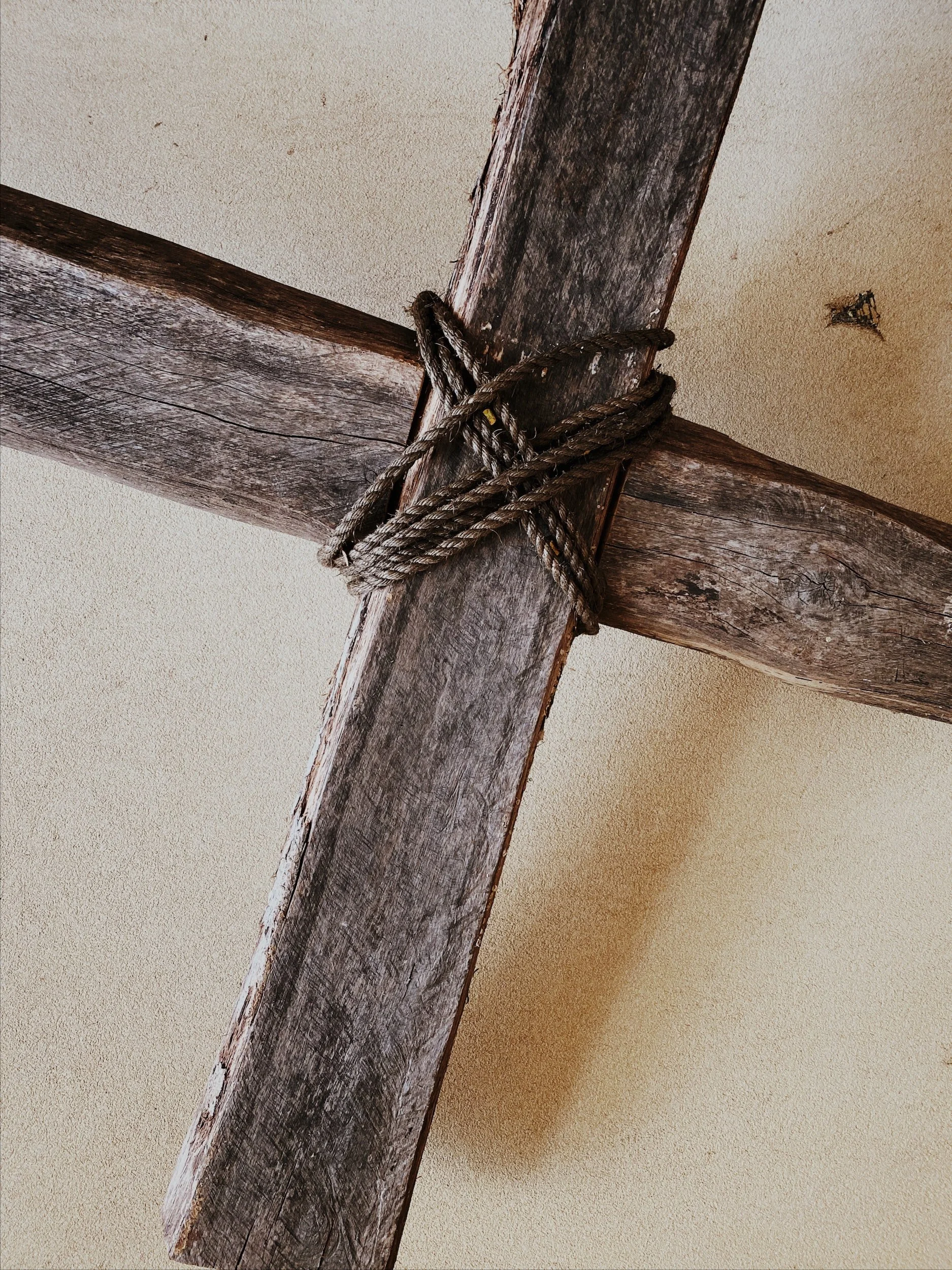
The cross puts everything in perspective. It is the new focus of our gaze. From His sacrifice to the time when redemption is complete, we are meant to live intentional lives that reflect His purpose. Keeping our eyes on Him helps us to stay on the path.
How are you staying the course?
REBECCA VAN NOORD
Barry, J. D., & Kruyswijk, R. (2012). Connect the Testaments: A One-Year Daily Devotional with Bible Reading Plan. Bellingham, WA: Lexham Press.